Little hands. Big discoveries.·Print-at-home play for ages 1–5
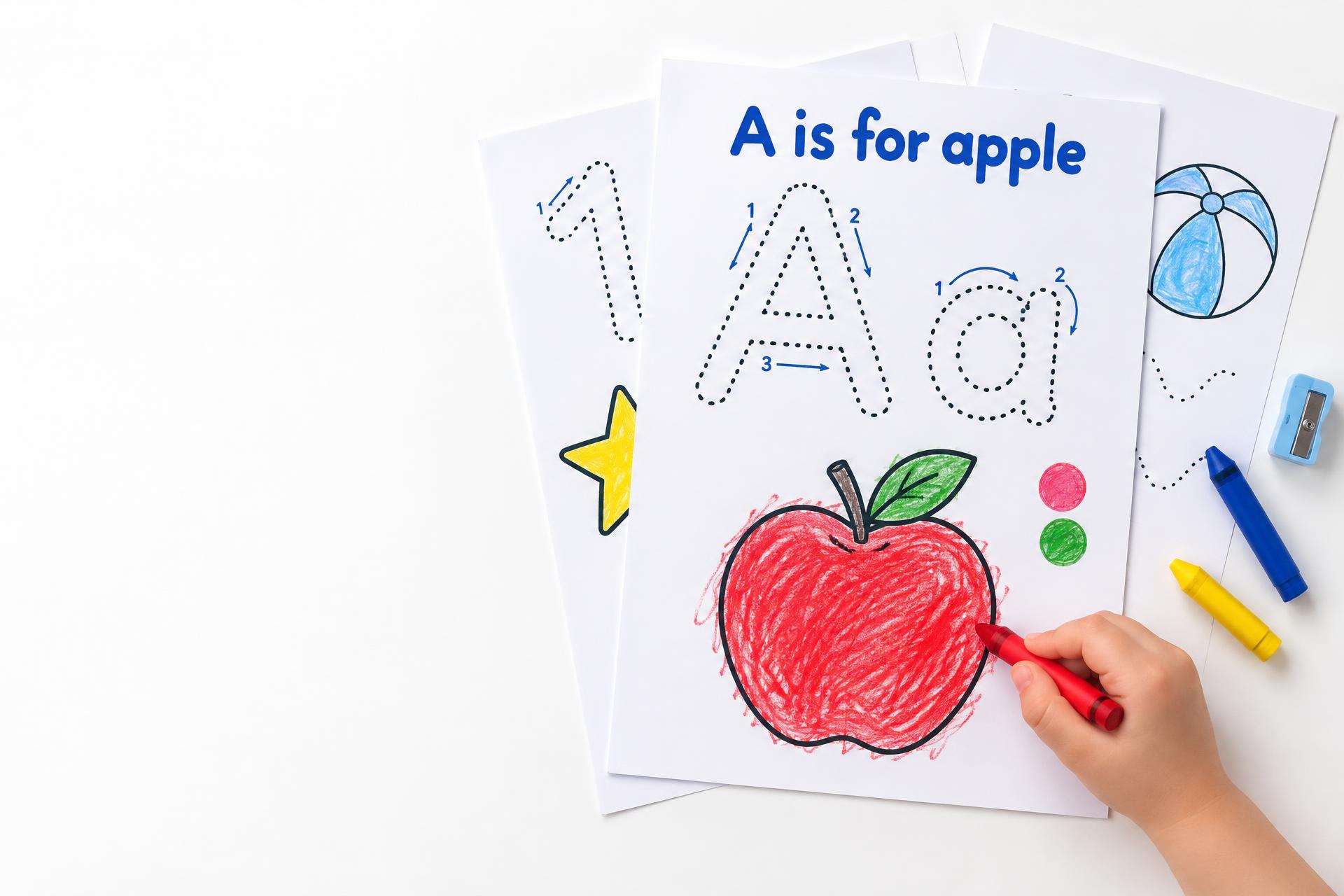
Concept preview of the apple tracing page colored in with red crayon, alongside number and ball pages
MEET THEIR FIRST FAVORITE PACK

My First
Letters &
Numbers.

A little tracing. A lot of coloring.
Big “I did it!” moments.

Turn a few quiet minutes into hands-on discovery with printable letter and number tracing worksheets made for curious little learners.

Available now on Etsy, instant PDF download.

8-page PDFAges 1–5Print & repeat
Built on the Segmented Caterpillar approach
Small steps.BIG smiles.
Digital downloadYour printer, your paceNo screens neededMade for little hands

ONE PACK. PLENTY OF LITTLE DISCOVERIES.

A little look inside.

First letters. First numbers. Their own colors.
Six activities, plus two pages just for you.

A

Apple

B

Ball

C

Cat

1

One star

2

Two balloons

3

Three petals

A welcome page for parentsThe thinking behind the activitiesActivity design previews

OUR APPROACH

The Segmented Caterpillar Approach.

Named for our mascot, and for how it came together: not a theory we started with, but five things we kept finding mattered while building the pack page by page, each one asking a little more than the last.

Handwriting readiness first

Real stroke-order arrows, not just ‘color this shape.’ Kids trace the way they'll eventually write, building pencil control before they need it.

Difficulty that grows with the page

A plain circle becomes a curved beach ball becomes a cat with whiskers and a tail. Each page asks for a little more control than the last, without ever feeling hard.

Counting that's really counting

One star. Two balloons. Three petals on one flower. Matching a number to an exact quantity, not just naming it, is where real number sense starts.

Color hints, not color-by-numbers

Soft pastel hints suggest a color; they don't demand one. The crayon decisions stay the child's, which is where the real fine-motor and creative benefit lives.

A page a child can finish

Every page is sized and paced to be finished in one sitting. Finishing matters: it's where focus and that ‘I did it’ feeling come from, not just the coloring itself.

How We Developed This Approach

The Segmented Caterpillar Approach wasn’t written down first and fitted to a pack afterwards. It came out of building My First Letters & Numbers page by page, noticing what actually got a child to pick up a crayon and finish, and finding the same five things working again and again. Here’s how each one came about.

Read how each principle came about

Handwriting readiness first

The first pages we drew were plain outlines: color this in, nothing more. They didn’t feel like they were teaching anything. So we went back and added numbered start-dots and direction arrows to every trace letter and number, the same stroke order a child will eventually use with a pencil. Coloring stayed the fun part; the tracing underneath it started doing the handwriting work.

Difficulty that grows with the page

Six pages at the same difficulty, back to back, felt flat. We reordered them instead: a plain circle apple first, then a ball with curved panel lines, then a cat with whiskers and a tail, each asking for a slightly steadier hand than the last. The number pages climb the same way, one star, two balloons, three petals to count on a single flower.

Counting that's really counting

Early drafts just put a numeral next to a picture. That’s recognition, not counting. We changed the number pages so the child actually counts matching items, because matching a numeral to an exact quantity is what builds number sense, not naming the numeral on its own.

Color hints, not color-by-numbers

Our first instinct was to lock in the ‘right’ color for everything: an apple should be red, a ball should be blue. That turns coloring into following orders instead of making choices. We pulled it back to soft, faint color-hint circles, a suggestion a child can take or leave, so the crayon decisions stay theirs.

A page a child can finish

We kept catching ourselves adding more to each illustration: more detail, more going on, more to fill. Every time, it made the page harder to finish in one sitting. We pulled back to one bold, well-sized picture per page, because finishing is what builds a child’s focus and that ‘I did it’ feeling, not how much detail is on the paper.

That’s the Segmented Caterpillar Approach: not a theory arrived at in advance, but five things we kept finding mattered, kept in place on every page since.

Our own approach, informed by general early-childhood development principles. Not a clinical method, and not an outside endorsement.

A LITTLE PLAY WITH A PURPOSE

More than staying
inside the lines.

Little hands, growing control

Tracing and coloring give little fingers a chance to practice pencil control while getting to know letters and numbers.

A gentle place to start

Numbered stroke arrows offer direction. Simple shapes build up gradually, with room to go at their own pace.

Their colors. Their little wins.

Soft color hints are suggestions, not rules. A blue apple? Go for it. The trying is what matters.

LESS PREP. MORE PLAY.

From download
to “look, Mom!”

01

Download

Your pack, as a PDF.

02

Print

A page or the whole pack.

03

Trace & color

Let little hands take over.

FROM ONE PARENT TO ANOTHER

Little moments worth sharing.

Mia actually sat still for fifteen minutes doing the apple page. Fifteen minutes! I don’t know what magic is in those little arrows, but I’m not asking questions.
Clairemom to Mia (3)
My son has never finished a coloring page in his life. He did all six in one sitting and asked for more.
Tomdad to Hugo (4)
I liked that it wasn’t just coloring. She’s tracing the letters properly, the same way her preschool teacher showed us at home.
Priyamom to Anvi (5)
No tablet, no app, just her and a packet of markers for twenty minutes after school. That alone was worth it.
Sarahmom to Freya (4)
Bought it as a quiet-time activity for my grandson. He brought it over to show me, bragging about his star. Melted my heart.
Dianegrandmother to Jack (3)

Sample content, real reviews coming soon.

BEFORE YOU GET THE CRAYONS OUT

A few good
questions.

What ages is the pack for?+

It is aimed at ages 1–5, with a grown-up alongside. Younger children can explore coloring; tracing can wait until they feel ready.

What’s the ‘Segmented Caterpillar’ approach?+

It’s our own name for how the pack is built: real stroke-order arrows, difficulty that grows page by page, numbers matched to exact quantities, color hints that stay optional, and pages short enough to finish. It’s our approach, informed by general early-childhood development principles rather than an outside endorsement, and all five points are set out in full under The Segmented Caterpillar Approach.

Is this a physical product?+

No. This is a downloadable PDF to print at home. No physical item is mailed to you. It is available to buy and download right now on Etsy.

What paper and printer do I need?+

Final printing and paper-size guidance will be confirmed with the finished PDF. Ordinary printer paper and crayons are the planned starting point.

Can we print it again?+

Yes. Print the activities as many times as you need for your own child's practice.

What is the refund policy?+

Because this is an instant digital download, all sales are final once the file has been delivered. If you run into any trouble with your download, message us through Etsy and we’ll help sort it out.

THE FIRST OF MANY LITTLE ADVENTURES

Crayons at the ready.

My First Letters & Numbers is available now as an instant PDF download.

Ready when you areDownload, print and start tracing today.Shop on Etsy